THE DOOR SWUNG OPEN before he could knock for the fourth time. Took them long enough, he thought, even though within himself he knew they had been expecting him. He was certain of it, probably since yesterday. But he paid that detail no mind, not at that moment, partly because his bones were chilled, his tired corduroy jacket failing to brave the cold.
Park Street was always like this, colder than the rest of the city, yet the snow fell the shiest around these parts. These upscale parts, with their manicured gardens, stone porches and concrete steps that led to mahogany doors with bells that chimed cheerily when pressed, a feature his own building lacked, perhaps since its first occupants had lived there over thirty years ago.
“Hi there, Theresa!” his voice sang, a pitch higher than his own. He tried not to look cold, going as far as placing his gloveless hands on the banister he had been sitting on. She eyed him briefly, taking in his look. He had a way of looking worse each time he came over, she thought, almost saying it aloud but settling for a shy hello instead. Her eyes averted from Micah’s and her body swivelled into the warm, dimly lit space. Micah’s shoes tapped behind her, and, as the door kissed the frame, warmth sealed.
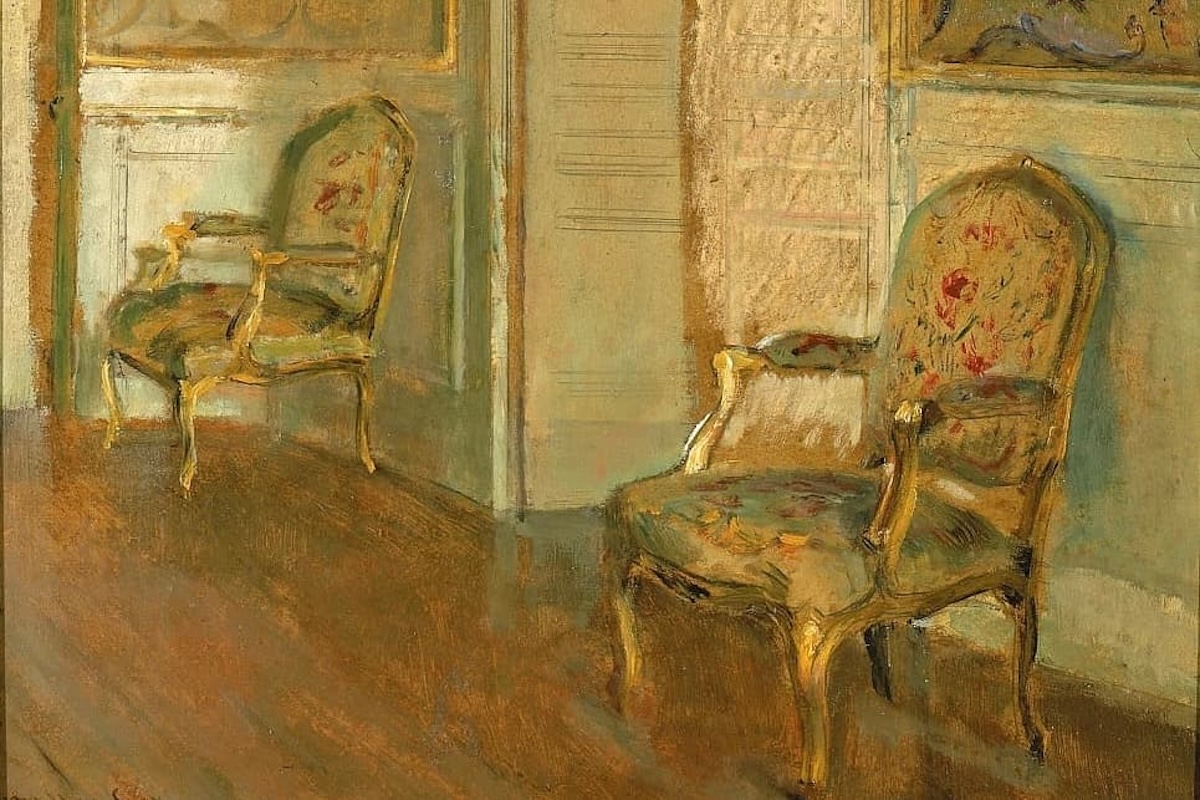
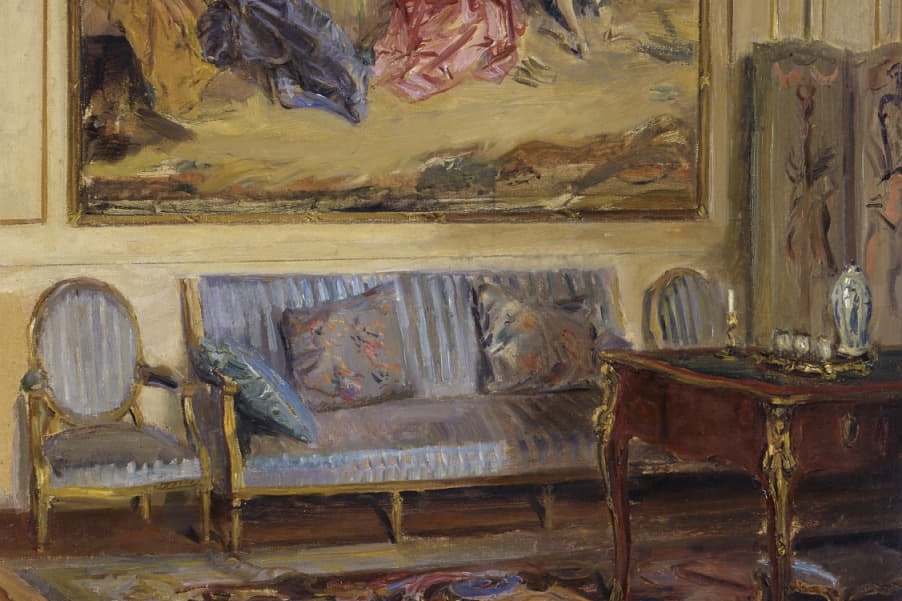
Decadence greeted his eyes, the kind he only experienced on days like this when he decided to visit his mother. The hallway was dressed in a striped mint and white pastel wallpaper, like an ice-cream swirl, with delicate etchings of peonies. The chandelier sprinkled fragments of light across the herringbone floors. The hallway seemed to grow and grow while Theresa’s frame shrank. Her steps were set in an imaginary line, and she walked with her arms in front of her, her elbows sharply angled. I couldn’t live like this, he thought to himself. As he moved through the tunnel-like hallway, he began to hear the pristine notes of classical music, a flavour his mother had adopted twenty years prior when they had first moved to this country, but one he had never quite successfully aligned himself with. He was never sure which composer it was she played, whether Mozart or Debussy. They all seeded the taste of shame within him. He shut his eyes tightly at first, then less so, and breathed deeply. This had to go well.
“MWANANGU! DENGA RANDIRANGARIRA! My son has come. Praise be!”
He felt the texture of her voice before he saw the fabric of her being. At the archway, as the hallway yawned into the open-concept living room and kitchen with floor-length windows that let waves of cool afternoon sunlight drown the space, he saw her. But then he truly regarded her. He took in the shrillness of her body and the way the couch she sat on seemed to encase her. Multiple layers of fabric, fleeces and cashmere blankets cascaded off her. The lambswool cherry-red sweater she wore was hollow around her neck, wide enough to fit his own body twice over. Something about this sight pained him, but he felt unprepared to sit with this reality, especially when this was only the beginning of a long day for them.
“Ma. You look well,” he stuttered through his lie.
As he walked towards her, his arms outstretched, he felt something tender shimmer at the edges of his heart. He bent down and swallowed her into his embrace, the longing only growing deeper. It didn’t make sense to yearn for someone who was right before him, but he did. Her frame was truly frail, bending like cartilage as he breathed in and out while holding her in his embrace. Slightly, she shifted away from him, slowly at first, then more insistently as she freed her hands from the many fleeces wrapped around her. Micah lowered his frame, kneeling on one knee and aligning his face and eyes with hers. He looked at her intently, deeply, something he hadn’t quite done in years. She had always been beautiful, the first woman he had truly loved, admired.
Her hands, like wistful branches scratching against a kitchen window, moved across his face. She seemed to be awestruck by this man before her, one she hadn’t quite known for some time now. For this, she was thankful. Illness always called her son’s heart back to shore, to home, to a world she had cultivated for him, where things did not swirl but stirred calmly.
“Your beard — when was the last time you shaved? Ko nzwara? How about your nails? Come on now, Micah. Let me see your nails. Have you cut them? Have you been eating? I know I taught you how to cook, but these skills, I know, are short of use.”
Her questions and remarks blended into one another and rained over him with quick succession, a habit of hers for as long as he could remember. Something borrowed/revived from his childhood, he remembered then. As her hands traced over his face, her mouth scrunched up tightly in disapproval of the length of his hair, his wild, untamed, kinky hair that hadn’t known a comb in years, ends splitting and chaotic. Her eyes settled on his jacket. With this, a shadow of shame burdened her eyes: his jacket was threadbare and faded, a former memory of something once useful, once upon a time considered aesthetic. Her eyes didn’t just stop there; they traversed his shortened frame, all the way to his knelt knee, one covered in black denim that too was a ghost of itself. At this, her breath grew laboured, imperceptible. She knew not to hound him too much. The past had taught her better than that.
“Okay now, Ma, my knee hurts now.”
At this, her hands fell unwillingly from his face and onto one of the many blankets. Just like Theresa had done before, her eyes shied from Micah’s gaze as he stood up. He strained at the effort of bending a knee that wasn’t familiar with such mobility. Her eyes lingered on the grey of her Turkish-style carpet, the one meant to add warmth and character to her home as instructed by the interior designer.
“Would you like some tea? I am making myself a cup if you don’t mind.” His voice echoed.
The high ceilings were the true star of this home of hers, he thought, as he moved into the kitchen, fiddling with the teaspoons and cups in various drawers and cabinets. He filled the kettle and called for Theresa, asking if she knew where the sugar was, making small talk even as he could see his mother floating above her own body, lost in thoughts he had no interest in indulging.
He didn’t know much about Theresa. A lot had happened in the time that he had decided to exist anywhere but here. He knew she came around mid-July of last year against his mother’s wishes, but on the recommendation of her doctor. He knew she was a specialised nurse aide who provided his mother with company as much as medical assistance, taking her to appointments and the like. He thought her to be quite resigned. She kept to herself and always threw her eyes on inanimate objects as if they whispered more interesting tales than those of the person in front of her. Or, more accurately, him. It made him question himself, which he didn’t like, and he found himself trying really hard to capture her attention, even for a brief moment. However, the harder he tried to shift the conversation to her interests, her studies, her family, the more she retreated. Was he that insufferable? Is that what Marilyn, his mother, was whispering to her telepathically in that very moment? He questioned it, found it improbable and nonsensical, but it still upset him. It made him not like her. It made him hate himself.
They went about in this fashion even after the kettle had silenced itself and the bubbles had long dissipated. A fly on the wall, if it paid them any mind, would have thought they had much more to offer one another than they did. Finally, Micah released her from her temporary imprisonment and turned the kettle on again, wasting resources as he did best. He took out the china he knew Marilyn loved. This had been instilled in him from early on. She liked the four-and-a-half-ounce white teacup with a golden rim. He added two teaspoons of honey to her teacup. For his own, he counted teaspoons of white sugar starting from zero and stopping at three. Four teaspoons of the sweetener, but three in his mind. He was adamant. He placed full cream milk in his and mint leaves in hers. He reached for saucers. One for her — she had always stressed this — and one for himself because he knew she would scold him if he didn’t have one. Thirty years old, and still, he feared her reprimand.
“MOTHER DEAREST,” HE said theatrically, “I have finally brought your tea. Two teaspoons of honey this time. I wasn’t sure if your health allowed any more. Theresa mentioned something about that.”
He thought of placing her teacup on the glass coffee table. Instead, he noticed an accent table beside the couch and placed it there. Less movement for her.
For a moment, they sat in silence, slurping their teas. The liquid scalded their lips but set their insides alight. Micah was unsure why he had a polarising reaction to his mother’s comfortable indulgence in lavishness: the fabric of her clothes, the emphasis on imported china, the buoyant affinity for refined delicacies and the crisp notes of classical symphonies. As he sipped his tea, the sweetness triggering a mild ache in one of his molars, he looked out the window and over at the city, which rose and fell like incisions made with a Swiss knife in the hands of a rookie.
The skyscrapers pierced the atmosphere, while the more affordable, derelict residential buildings paled in comparison. Their façades were older, having been scorched by fires or ruined by sloppy renovations; their height was stunted by developer budgets, and their windows were smaller and less apparent the newer the buildings appeared to be. Sitting here, on a couch he didn’t own, drinking tea from fine china he could never afford for himself, staring at his own borough, too ashamed to confess it to his mother even though she knew — she only had to take a look at him to taste the poverty and spit it out with a quickness — he knew this, her life, was a life that did not belong to him. It was pretentious to sit here and feast on someone else’s earnings and cast jabs and judgements over the same streets and neighbourhoods he found refuge in, arms he would fall back into once the sun had set. He knew this all too well. Perhaps that is why he had stayed away. He deserved no part of it. His stomach rumbled begrudgingly.
“Thank you for visiting, Micah, my son.” Her voice was no louder than a whisper, so low that Micah was not sure if he had really heard her, though he was certain he knew what she meant.
“Of course. You are my mother.” He felt the severity of what was implied by her words.
It felt absurd, a caricature of the life Marilyn had spent her lifetime weaving together. With every goodnight kiss and morning hug, she had kneaded compassion and thoughtfulness into Micah. These were lessons she believed made a boy and in turn made a man, one God could smile upon. Now, as they sat near each other, Micah unsure of the last time he had visited his mother, his mother unsure the last time she hadn’t had to beg to see him, those lessons seemed like vapourising ethanol, almost like they had never been actualised. It had become a personal defect of his, wondering why he found it challenging to liquefy and inject these ingredients he was certain he once possessed back into his aura. They always stirred within him but never quite translated into his dealings with people: the half-friends he had, strangers he met on the subway, family he was obliged to exist around and lovers he desperately yearned to know but never truly did. Sometimes he felt broken because of this, as if too far gone to exercise love.
“How’s your leg, Ma?” His words fell flat between them, lifeless and stale.
He knew he ought to have asked this earlier, probably as soon as he had walked through the door, but he chose not to. He shifted his legs onto the sofa, contorting them into a pretzel and his teacup in his left hand. She shifted too, rather uncomfortably. He winced.
“Oh, same old, same old, my son. I have Theresa to thank for being so attentive and kind to me.
May God bless her surely.”
Sweet Theresa, Micah thought, bearer of all that meant well. “Speaking of Theresa, she mentioned your next appointment is tomorrow, no?”
At this, her gaze settled on the carpet once more, this time tracing its edges and patterns until finally landing on a minor speck or stain. She couldn’t tell which it could be, but it bothered her.
Again, he sipped his tea, and again, he focused on the skyline, a sour reminder of what he was. And now Theresa too had the same effect on him, a lady he had met a handful of times and had only spoken to long enough to learn the most insignificant information, exchanges he knew he would forget as he rode on the subway.
“Did you plan on telling me this before today, or was that supposed to be more of an afterthought?” His eyes were desperate, fixed on her unrelentingly, even as her neck remained stiff and craned over the stain she had become transfixed by.
“I did plan on telling you. I hoped you would have picked up my call last week, seeing that you don’t come around as much anymore.” She took brief but consecutive sips of tea. A mint leaf floated aimlessly among the other lost stars in her cup, rocking back and forth with each movement.
“Yes, Ma, I am aware of that. Have you asked yourself why, though?”
“I have, but it has never quite justified not seeing your sick mother, now has it?”
He shuddered.
“I’m sorry, Ma. Things haven’t been the easiest with work lately.” He scratched his head. A finger broke through a knot in his hair. He knew this was going to be unpleasant. He had been aware of it before he walked in that afternoon, but with this insurmountable mountain forming between them, he was certain of it.
Work had always driven their self-identification, acting like a lubricant for difficult moments. When they couldn’t confront the scarier parts, they found solace in the logistical mechanics of existence: schoolwork when he was much younger, work as he aged into adulthood, politics when conversations regarding work became less tolerable, and gossip when none of the former could pacify the frustration surrounding what lay unsaid. Purpose had become currency between them. Gossip in particular had fuelled the false closeness they once had. To hide in the stories of former childhood friends peeled back the layers and highlighted how, despite his disappointing life, it was never as shameful as that of his former friends.
Her eyes searched his for a truth she was not particularly keen on finding. “Speaking of work, how has that been going?” Her right hand patted down the soft wool of one of her blankets, willing away the creases in her own thoughts.
He took a swig of his tea and choked on its sweetness and burned his gums, too. “I got a column in this week’s publication.” He smiled, ignoring the burning sensation that tap danced across his gums, feeling temporarily proud of himself, but remembering to be humble. These moments of reprieve were few and far between. “Jenkins, the editor, I’ve told you about him before, was very thrilled when he read it, said I am finally getting the business.”
When Micah had said he wanted to be a writer some twenty-odd years ago, this isn’t what Marilyn or Walter, his father, had imagined. Micah wasn’t sure he had used the term writer specifically, but now he believed he did. It felt more sophisticated to say this to strangers who asked when he knew, when he had felt that this was his true calling beyond being a doctor or lawyer. More accurately though, he had probably watched his father curse under his breath when the locusts swarmed the corn, eating away at months of the labour that was intended to feed him and his mother through the winter. Micah felt an urgent need to speak on behalf of the locusts, defend them and explain that they too were hungry like he was at times. They all were hungry at times, even his father. He found no fault in hunger, and so he thought his father shouldn’t either.
As he had gotten older, finding the term “writer” neatly italicised and tattooed on paper in the special edition Oxford dictionary his father kept on his bedside table on top of his bible, Micah had felt a part of him awaken, excited like photons. The word “writer” continued to grow like ivy within him, sprouting newer, more complex ideas like journalist, author, editor. These words were stardust he sprinkled onto his dreams, and the coins he collected from the tooth fairy were a chance to finance this dream. He was always acutely aware that with every tooth he deposited under his pillow and with every distinction he received on his report card, he grew closer to obtaining this imagined reality. However, sitting on his mother’s couch at this moment, his father long gone and the stardust transformed into plebian, suffocating dust, he knew this was not what his dreams had been made of. Was it? His molar ached more incessantly now.
“Micah,” his mother paused, taking a long moment to fill her lungs with cool, clear, dustless air, “you have to find something steady. Something that can see you through. I know you believe in this dream, but I find it hard to believe that it is materialising, all things considered.” She felt her chest deflate.
“Ma,” he started, then stopped. The words had glued themselves in his throat. “I know it doesn’t look good right now, and sometimes work is a little less consistent, but this is big, Ma. I am so close.”
Marilyn did not particularly like playing this role. It was never her forte to watch herself be the murderer, the serial killer of her own child’s ambitions. She wasn’t quite sure when motherhood stopped being about fairytales and became more about folklore. The transition from coaxing his little fluttery dreams to speaking hard logistics had shaken their tender, once-real bond. She knew that. She knew it right now, but her fears outweighed the need to lick his wounds and bandage them with betadine.
“Micah –”
“No, Ma. Please listen to me, just this once. Please be happy for me. I am so, so close. The other day, another senior editor, Marianne, she works for another magazine, said my words have a moving quality to them. She believes in me, Ma. Not to be presumptuous or anything, but she isn’t even my mother, and yet she has shown up for me. If she can do it, I know you can. You used to, and I just can’t understand when or how that changed.”
The back of his throat ached. It felt like chewing on mint gum and drinking cold water right after, burning with the purity of cleanliness. His blood was pumping at speeds he had only known when conversations concerning his career and his future had ensued either with his parents or anyone really. He had always felt a strong urge to protect this abstract pursuit, something he knew none of them understood about his craft and his means to an end. All he longed to do was write; to speak for the lives many have wished to live. He sensed himself growing paternal over his dream, eager to give it a fighting chance. However, this sacred relationship he had with his dream had become synonymous with futility, a special quality he had become well known for among his family and friends.
“Micah –” she started up again, sounding more urgent and realising the conversation was slipping from her. “It isn’t that I don’t believe in you. I just want something more steady for you, my son. Why can’t you see this? I am sick. You and I have both known this for a while. It isn’t new. I think it is completely possible for you to be a writer. I would just like to see you do it the right way.”
“Is that so? What is the right way, Ma? I would like to know, seeing as you know so much.”
Like his tattered jacket, he was coming undone.
“With whatever time I have left, I would like to see you go to college, enrol at least. You can do it. You have proven yourself before. It would mean so much for me to see this, even if I may not fully see it through.” Her voice was quivering, her reality dawning upon her.
“And here you go again, weaponising your sickness to bring up this college thing again. You think I don’t see you’re dying?” The room fell silent. Despite them always being aware of it all, it had never occurred to them to speak it. To say it aloud felt like declaring it to be — a life sentence to a death sentence neither of them was fully prepared to digest.
“I see it, Ma. I know it. I think about it just as often as anyone else. I am afraid of it, but I also want to be my own person, too. I want it just as much as you want it for me. It’s a shame I just can’t make you see it the way I do.” His voice resonated against the walls, the glass panels, the high ceilings.
“You know your father would have wanted more from you, for us.”
He was not sure which part of him unravelled first. Did he finish his tea first and then stand up, or was the tea already finished and standing up was an independent action, divorced from the passive consumption of this hot fluid that swished through him?
“Actually, don’t. I don’t think I can do this.”
The rage guided his feet faster than his lungs could take in air, leaving him breathless. His chest tightened. The heat that stung his eyes seemed to disgust him, a sneer at his weakness, his sensitiveness. He has never liked this about himself, that he feels too much. So, as he stumbled to the archway, his body moving through the long, long hallway, his eyes ignoring the peonies on the wall and his ears deaf to the classical music that had painted the scene he first walked into, he was unable to take in the last of her words, her pleas for him to stay, her questioning what she had done despite knowing exactly what she had and hadn’t. He missed the sight of her collapsing into herself like an accordion, diminishing in size like a puppet packaged by a clown, ready to be taken off stage and to a new city for yet another performance. He missed Theresa, his mother’s chosen child, rushing up to console her. Thoughtfulness and compassion. Ingredients he lacked. He missed all these things as his rage opened the door, and the cold kiss of winter greeted him. He remained unchanged, lost within himself. Perhaps he should have stayed away.