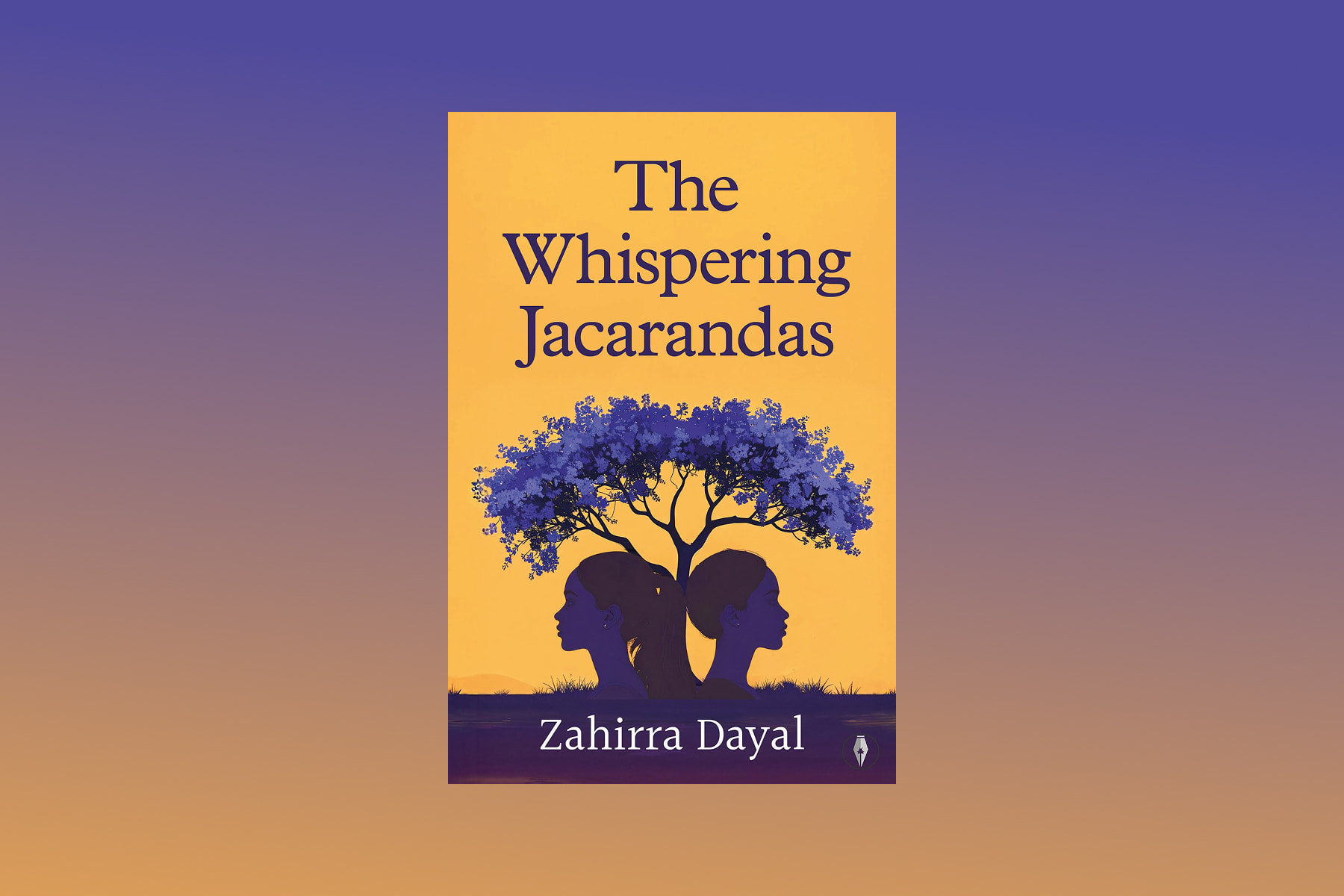
FOR SISTERS ZAYNAH and Amira Ashraf, life is divided into before and after: before they experience an unspeakable trauma, and after said trauma capsizes the world as they know it, rocking their relationships and their individual senses of self.
At the start of “The Whispering Jacarandas,” the debut novel from the London-based author Zahirra Dayal, the sisters are growing up in an Indian community in Harare’s Belvedere neighbourhood in the 1980s and 1990s. Zaynah, the older of the two, is responsible, subdued and tightly wound, as first-born girls tend to be. In comparison, Amira is “fire wrapped in skin.” Sharp-tongued, vivacious and courageous, she lovingly ropes her sister into her shenanigans. They are young girls, coming into their own.
And then it happens. One night, they experience a violent betrayal at the hands of someone who should be their protector. From then on, their days are tainted by this “unsaid thing,” this tentacling splotch of ink. Embedded in a culture of silence, the sisters find it impossible to speak up, so Zaynah retreats into her world of one and physically self-censors while Amira adopts self-destructive habits that land her in trouble. Along with their innocence, the sisters lose something else too: each other. As their relationship splinters and their paths see them separated by a national border, they must learn to navigate life anew.
With evocative prose, Dayal paints a multisensory picture of the sisters’ lives, in all their beauty and devastation. On its surface, “The Whispering Jacarandas” is a book about sisterhood, what strengthens them and what risks breaking them for good. But it is also about womanhood in cultures that demand secrecy, where reputation reigns and hurt is tucked away. The novel shines in its exploration of reckoning with trauma in girlhood and leaves room for readers to view this from a multigenerational lens. Through the stories of Zaynah and Amira, their mother Ella, their aunt Bee, their grandmother Maryam and the cast of Ashraf women who flit in and out of the scene — and whom Maryam believes are all cursed — the novel unearths the ways in which voice remains out of reach.
“Too many girls and women swallowed the words they needed to spit out,” Dayal writes. “Words fermented and rotted inside the body, killing it off slowly.”
Just as it is rich in poetry, the book is a trove of history. As the members of the Ashraf family contend with change in their homes, they, particularly the adults, are also faced with a country in transition, as Zimbabwe grows into an independent nation, bringing to the fore strained racial relations. “Outside, there was a mini apartheid system, with the existence of many different Zimbabwes,” the reader is told. Dayal deftly exposes the racism and colourism that percolate behind closed doors during this time, represented by some of her characters’ frequent use of slurs and derogatory terms and their maltreatment of their Black housekeepers.
This exploration, while necessary, feels at times gratuitous. The early pages are replete with references to “bushmen” and “darkies” and marrying within one’s own kind, to the point of repelling the reader. However, the adults’ repugnant language is seemingly counterbalanced by the behaviour of the younger, much more culturally sensitive generation. At one point, Amira becomes enraged and responds violently when another student, who is white, proclaims that “brown people have lice, because they’re dirty.” As Amira and her sister grow up, they maintain this inclination towards justice, born of their trauma and their desire to right the world.
Although the book is emotionally weighty, Dayal injects occasional levity through glimpses into the abundance of Indian and Muslim life in Zimbabwe — the lessons learned from ancestors; the stories shared over vibrant plates of food made with cardamom and saffron and cinnamon; the rituals for the dead that are labours of love. While the sisters, and the women who surround them, are sometimes victims of their culture, they are also ultimately buoyed by this same storied past.
“The Whispering Jacarandas” is at times brutal, but it is always tender, treating Zaynah and Amira with the care the world has refused them. By the end of the book, one feels as though one has grown up with Zaynah and Amira. Having shared in their pain and revelled in their joy, one feels fiercely protective of these young women. But no matter the reader’s connection and no matter how large the Ashraf family, in the end, the sisters only have each other.
“The Whispering Jacarandas” is out 28 August 2026 from Fly on the Wall Press.