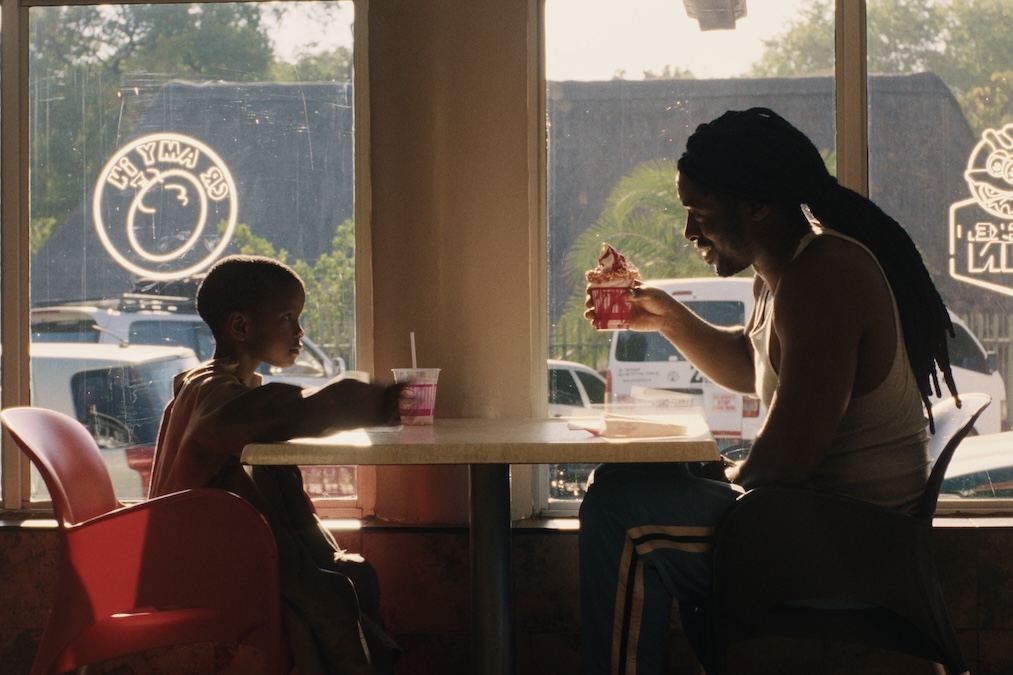
Editor’s note: Landlocked is interested in documenting Zimbabwe and Zimbabweans as they were and are in preparation for what they will be. We understand the importance of the archive, so we will be publishing a series of oral histories, sometimes long before the objects, people or events in question have officially reached the benchmark of “history.” As a relatively young country, Zimbabwe is in a state of constant transformation. The stories in this series are snapshots in time of that process.
_____
Every great cultural moment has its artistic collective: a motley crew of like-minded creatives who come together for the love of the game, making a name for themselves along the way. The Harlem neighbourhood of New York gave us ASAP Mob, and Los Angeles gave us Odd Future. Out of 1970s Senegal came Laboratoire Agit’Art, the avant-garde artistic group that blended modernism and tradition. And closer to home, Johannesburg had its Boyz N Bucks. Collectives shape and are shaped by the movements of their time, breathing exciting life into the zeitgeist. In Harare, where grit and hustle are the MO, the art collective Authors has emerged as an exemplar of grassroots vigour.
At its core, Authors is a group of eight friends: Nigel Guni, Sungano “Sunny” Katsumbe, Mufaro “Matt” Matura, Simphiwe “Simps” Moyo, Jabulani “Jabu” Mudzvova, Mutsa Jonah Mungoshi, Usher Takudzwa Nyambi, and Takura “Taks” Takavarasha. Spread across four different countries — “Thank God for WhatsApp,” said Nyambi — the crew is committed to the creative craft. Among them, they are skilled in film, audio, video, music, writing, poetry and visual art, and they have been nominated for or won awards, including NAMAs.
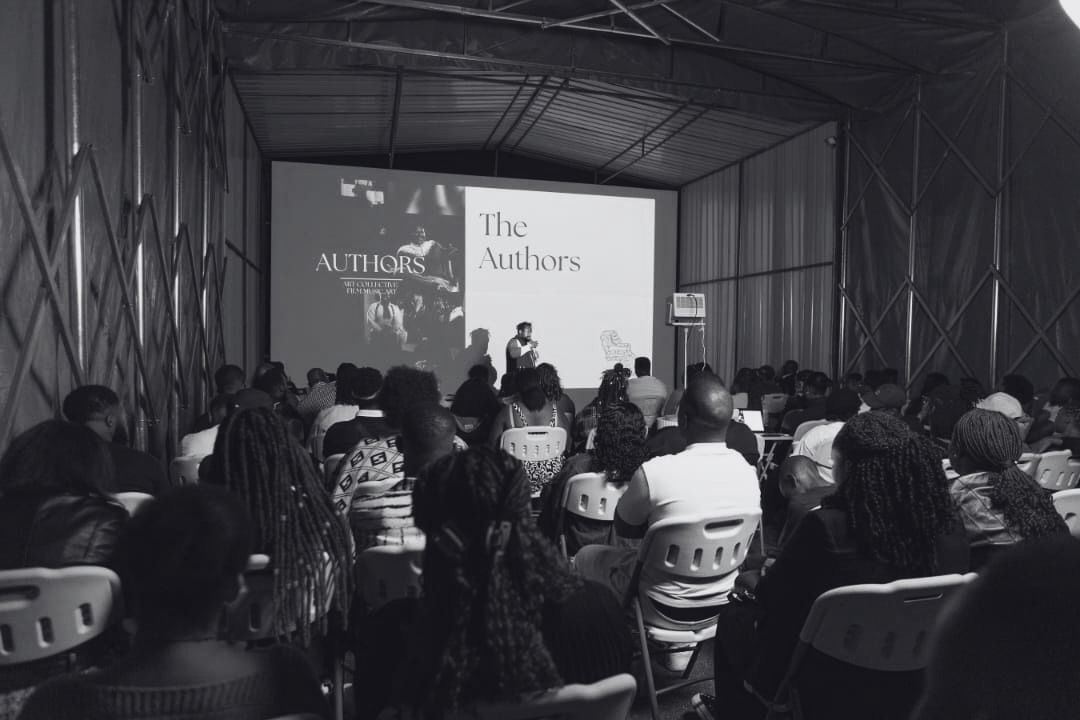
In its earliest days, the collective wasn’t a collective at all. The friends were simply showing up to support each other at various artistic events, mostly in 2023. Someone needed a hand with an exhibition? They were there. A member wanted to host a multi-artist concert? Count all of them in. They’ve evolved beyond merely propping each other up and now devote time to animating Harare with events where other creative types can also display their talents. In 2025, they co-hosted a screening of Prudence Chimutuwah’s eponymous documentary and held a well-attended private screening of Mudzvova’s short film, “Residue.” They’ve also put on “Garden Sessions,” intimate concerts modelled after the likes of NPR’s Tiny Desk or Sofar Sounds. In true Zimbabwean fashion, they’re juggling full-time jobs, side gigs and various passion projects while funding Authors on their own dime. As Takavarasha put it, “Dream big, but keep it within a budget.”
In this oral history, the members reflect on how they got their start and where they’re headed.
Nigel, the silent intellectual: Writer. Finance accountant. Based in Harare. “He’s a big thinker. Modern-day philosopher,” according to Taks.
Sunny, the ideas guy: Communications professional. Business developer. Based in Harare.
Matt, the politician: Product manager. Photographer. Digital artist. Based in Italy. “He is a very organised guy in a group of quite disorganised people,” according to Mutsa.
Simps, the keeper of order/the problem-solver: Lawyer. Documentary photographer. Founder of PaMoyo Gallery. Based in Harare. “On one hand, he is never available, but when he’s available… he becomes the most useful person you can come across,” according to Jabu.
Jabu, the chief whip: Film director. Screenwriter. Producer (although he doesn’t like the title producer). Based in Harare. “The older brother…the authoritarian…Every organisation needs someone who just reins everybody in,” according to Simps.
Mutsa, the one who gets everyone going/the yapper: Data scientist. Video and audio editor. Musician. Poet. Based in the United States. “He’s the one that gets us over the line,” according to Matt.
Usher, Star Boy: Journalist. Based in Harare and South Africa. “That’s Mr. International,” according to Sunny.
Taks, the hard-working, multifaceted "ADHD" creative: Lawyer. Creative entrepreneur. Based in South Africa. “Man is crazy,” according to Nigel.
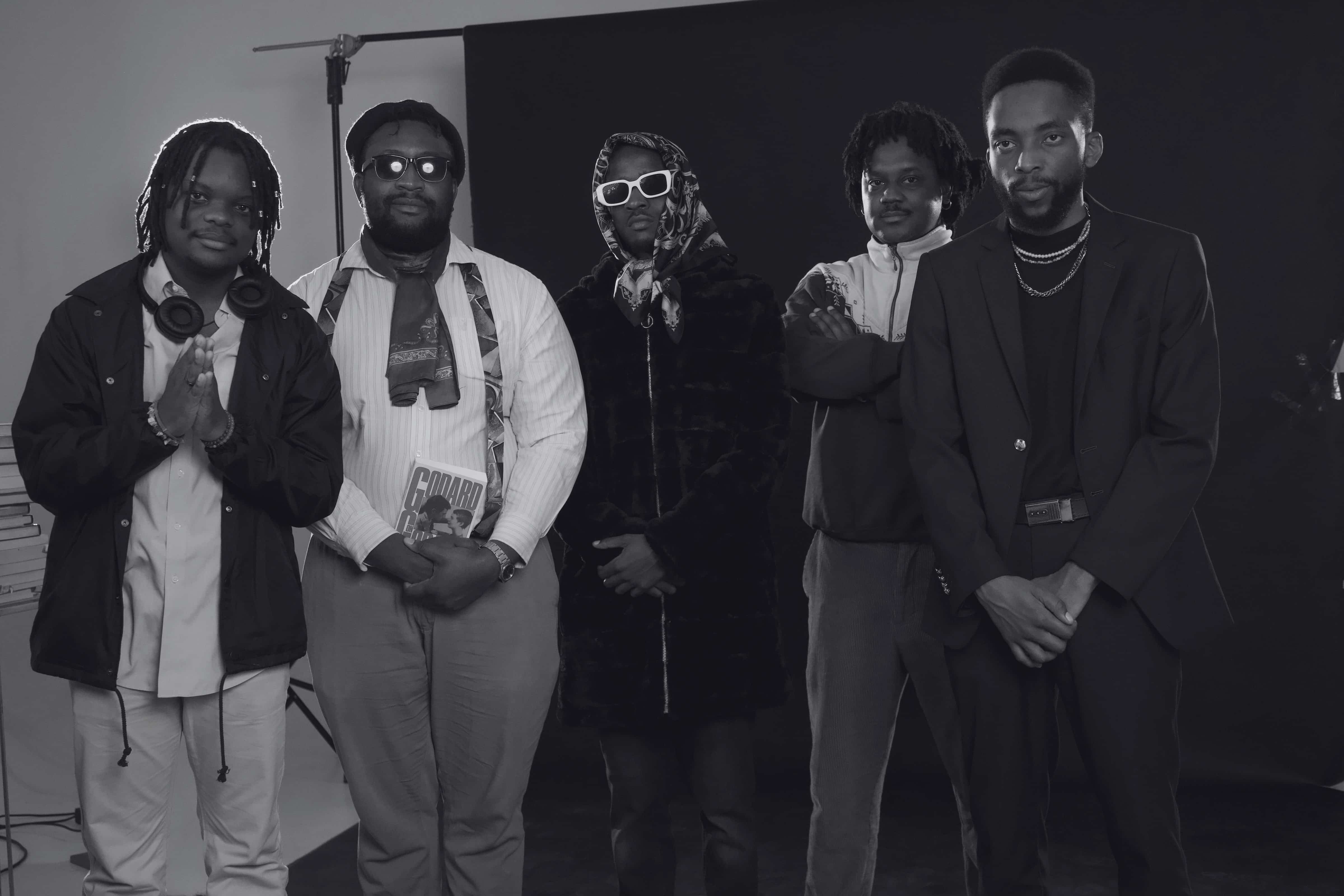
Matt: It’s always hard to pin down when the group was formed because I think Authors has always existed in different ways for a very long time.
Taks: We were all friends doing different things, and we were all in the creative space in different capacities. It’s a collective of like-minded people. We happened to be all back home in Harare.
Simps: There was never any plan to create a group called Authors. We just naturally linked up.
Usher: I think Jabu is probably the catalyst of the Authors idea and philosophy and seeing it as a collective. But it was very organic.
Sunny: I talked to Jabu a couple of times before about Boyz N Bucks and the energy they came with in South Africa when they first pulled up on the scene. It was young, very alternative. When you get a really good collective, the energy from that is really dope.
Matt: Talking to the other guys, they shared the same thinking. They were artists who wanted to platform their work and also wanted to see other things being put at the forefront. It pushed us to just come together and do it. We knew enough people to say, “Guys, we’re going to do this. If you want to pull through, then pull through.” I don’t want to toot our own horn, but I guess we had more motion than we realised we did, because we were just a couple of guys fumbling.
Jabu: I’d say the start was when Simphiwe had his exhibition in 2023. It was a very big marker for all of us to be like, you can do something, and then you can get it shown in the National Gallery.
Taks: We were frustrated with the Zimbabwean art space, especially early 2022 into 2023. It’s in somewhat of a renaissance right now, but we were feeling like there wasn’t enough range or quality within the space. The events weren’t creative. They weren’t innovative enough. They were just cash grabs. Even when you do something different and quirky in Harare, you end up having a lot of people just copying and pasting what they see here in Johannesburg, for example. If you go to Bulawayo, the art scene is very different. The creativity is very different. It’s not money-centric. It’s very identity-oriented.
Sunny: I feel at the time Harare wasn’t really popping in that aspect. Everything was very mainstream and, quite frankly, a bit stale. There was just a need for an injection of a vibe that you catch in any other metropolitan city.
Nigel: The one thing I hope will not come across in this interview is a certain level of pretentiousness. Pretentiousness is a relatively necessary thing within your frame of work. You’ve got to know what real quality is. We’re not saying people were not trying. There’s a certain environment that we enjoyed when we were [abroad] that we were hoping could come this side, and because we weren’t able to find it ourselves, we were like, “You know what? Let's do something ourselves. Let’s see where it goes.” And fortunately, it was received.
Taks: We decided that we can’t keep going to events and complaining. We can be haters, sure, but let’s be constructive haters. We took that, and we said, “Okay. Initiative, gents. Let’s start working on it.”
Jabu: Our launch was vague. Nothing’s worse for an artist than having to explain stuff. It’s annoying. We launched with all these nice visuals and then told people to come somewhere. At the end of 2023, Mutsa did an event with us helping in the background, the first “An Evening at Ela.” It was an artist showcase. It was incredible. So when the idea to form Authors came along, I was like, “Well, this is kind of the obvious thing to do.”
Simps: Till today, people know Authors as a holistic group, but they don’t know who the Authors are really, which is a funny concept.
Jabu: Every event we’ve done has been different. So what’s been nice is we’ve had a different audience at each event. People are used to structure. People are used to certain definitions. Our literal photos are on the social media. It’s kind of obvious who we are, but it’s still fun when people ask all these questions. Sometimes people ask if they can join. We never prepared for a scenario where people would want to join and we’d have to think about it.
Usher: Authors is a creative collective. It's a community. It’s a movement, in a way. It’s an initiative started by just wanting to create the space that we wanted to see in Harare. It’s a think lab for anything creative. It sort of came about as a WhatsApp group, but it evolved into a portfolio.
“We never prepared for a scenario where people would want to join and we’d have to think about it.”
Mutsa: It helps that we’re really good friends as a bunch. It makes it a lot easier to keep the work going, because it doesn’t feel like work at the end of the day. Most of our sessions just feel like catching up.
Nigel: There’s this “unselfishness” in our team. If someone comes and says, “There’s this project I’m thinking about doing,” we are willing to listen and to ask, “Hey, what do you need? How can I help?”
Matt: As a group, we complement each other. It’s like we’re all different parts of one big engine.
Usher: It’s a very mature group of friends. When we do perform well, we always try to think about what we could do better. It’s an open space to vocalise what you are feeling without anyone taking it personally. Friendship is built on trust, and that amount of trust has always helped make sure that there’s minimal conflict, because we know whatever someone has to say is coming from a shared vision of making things better.
Usher: We wanted more events and third spaces where creators could come and connect, interact and network. A lot of us came from different cities. It was mainly about bringing that energy and not necessarily bringing ideas from outside, but bringing a vibe where it was buzzing. Right now, we’ve got Kaos, Deep End and Fabrik Party, all these cool initiatives happening in Harare. But around 2024, it wasn’t as frequent. Now it’s about creating impact within the arts, and looking at it from a perspective where whatever we've created is sustainable.
Mutsa: We are part of this generation that’s been doing a really great job of creating art and telling stories and trying to bridge a lot of gaps. I feel sometimes that we suffer because we don’t have an existing infrastructure in terms of an art economy in Zimbabwe. What we do have is all kind of centred in Harare. We’ve really tried to do things that take us out of Harare as much as possible, not as much as we'd like, but it’s still a big point for us.
Matt: As much as we’re trying to go to other cities and other remote places in the country, we’re also trying to bridge a gap in Harare itself. There is a north and south divide, and the art suffers from it. There are so many great artists from different parts of Harare. It might not be to your taste, but we want to make it accessible for anyone who might want to borrow from it, reference it in the future, or even just to show our kids that this is what we had going on in the city when we were kids.
Usher: Right now, Gen Z and Gen Alpha are creating spaces that they want in real time, which is really good to see. It’s admirable because they’re not necessarily hoping for a space, but they’re actually creating it.
“You kind of have to stop thinking of art as this comforting thing that you go to for a sense of familiarity and routine.”
Mutsa: We don’t really have space for indie artists in general. So the Garden Sessions for us were a cool thing. We got two performers for the one that we threw in November 2024. We had Hanna, one of the biggest artists out of Zimbabwe in South Africa who had never performed in Zimbabwe. No one had really engaged her on that level. She’s proper self-made. She was making freestyles in her room. That’s someone who the industry, the current framework, has no space for, no time for. That really pisses me off.
Matt: For me, the biggest problem was the lack of documenting things. Other countries, other cultures have so much history to learn from, borrow from and build on because they just had the foundation. Look at South Africa and Nigeria. We hate the guy holding the camera at the party, but we will benefit so much if we have that to look at and learn from.
Mutsa: I don't like the fact that we don't treat our consumers with respect. There’s an idea that Zimbabweans like a certain kind of art, a certain kind of music. They can only appreciate a certain kind of thing. But art is so important, and exposure to things is so important, and the only way you’re going to create space for new things is you’re going to have to usher the audience along, and that will have a tremendous cascading effect. You kind of have to stop thinking of art as this comforting thing that you go to for a sense of familiarity and routine. We have to break free of that. It's completely unfair to look at the audience and decide what their ceiling is.

The members of the group had different recollections of the origins of the name “Authors” and equally different feelings about the name itself.
Nigel: I'll tell you one thing: that was super lazy. I think at that particular point in time, we just wanted to start the work. We were trying to get [our branding] down to something that we could be easily identified with. And so we’re like, you know what, we all write in some capacity, and I like to think Authors is quite a broad term that can encompass a lot of things. At our base, we are all authors.
Sunny: I remember they were trying to make the Instagram page, and we were trying to think about SEO and stuff, and we’re like, “No, it’s going to be so bad.” I think that’s the only time we ever discussed the name, but it was really too late to say that.
Usher: It was definitely Jabu and Mutsa [who came up with it]. I think it really stuck. I think it’s all right. It’s poetic in a way, I guess. Honestly, the way I view names, I feel like it’s ultimately about the work that you do.
Sunny: I woke up one day, and people were referring to us as “the Authors.” I would say Jabu and Mutsa came up with it. I just heard it randomly, and I was like, “Okay, whatever.” We never did a vote. It really stuck, but I don’t think there’s actually a story. Maybe we should make up one.
Jabu: I literally came up with a plot. I was like, “If I don’t come up with a cool name, these guys are going to come up with some dumb stuff.”
Simps: None of us can take credit for that. It was Jabu and Mutsa.
Jabu: The name Authors is literally the English translation of “les auteurs.” I’m really into film, so "auteur theory" and all that sort of stuff. However, getting really into the theme of authorship, it represented us well.
Simps: It’s a name that everyone looks back on and is like, “Wait, why are we called this, by the way?”
Jabu: It’s pretty funny because we call ourselves “Authors,” whereas people call us “The Authors.” Each of us really takes ownership of the art form, and I guess we were getting an idea of that to be like, “Yo, everything that you’re doing really has your own personality and a version of self within your work.” So I think for us, the name itself is like a declaration that everything that we’re going to do is going to purely be for us, by us.
In 2025, Authors registered as a business. Landlocked asked the group about the decision.
Nigel: As we were, it was good for small events and meeting up with other artists. But at the end of the day, the art cannot exist in a vacuum. We have to find other means to get ourselves out there. To be taken seriously, you have to have all your books in order.
Taks: We have a rough structure. All of us are on the board of directors, and everyone is in charge of different departments. It’s about legitimisation. We want to make an impact, right? When you think of art collectives, you think very loose. But I’ve always felt like there’s more impact in legitimising an operation. One of the biggest motivators was that the projects you want to get done require some sort of corporate buy-in.
Nigel: It also had the effect of solidifying the fact that we’re in this together. There’s something about putting your signatures into something that you're committed to that just makes you want to keep going further.
Jabu: [Incorporating] is a commitment. All of us have to provide our IDs, our names. But we always knew that we wanted to take this thing seriously. We’ve just been self-funded throughout and don’t really make any money. We just try and break even when we’re doing these things.
“...the art cannot exist in a vacuum.”
Matt: Everything we’ve done has been bootstrapped. We’ve pulled miracles. And when we try to tell people, they just don’t believe it. This is a result of just sheer determination and not accepting that we cannot do it. And also the community opening their arms to us.
Sunny: I’d say the bigger challenge that we’re facing right now is just manpower on the ground, because most guys aren’t in the city anymore, and just the pressures of having full-time jobs. Increasingly, sometimes it feels like you have to prioritise things that actually bring in money because at this point, it’s still just a passion.
Usher: A lot of our work has been proof of concepts channelled by wanting to see or create stuff that we want to be a part of, as opposed to actually aligning it with business and commercial goals. It’s increasingly difficult now, with people in different cities and everyone busy with work, but I think we’re looking at commercial sustainability in the future. As we carry out cool projects that we’re passionate about, we’d also want to create stuff that monetises.
The last time the men were all together in the same place was in 2024.
Simps: The first thing Zimbabwe has to fix is the structures in the art sector. Because without that, we’re not going anywhere. Clearly, we’ve got people who believe in the institution of art, but we’re not “value-adding” our own art. We’re focusing on industry, agriculture. Sure. Fair enough. Those have always been our bedrock, but we’re forgetting ancillary industries that could contribute more.
Jabu: Something that we are going to have to do, and I think it has been working, is taking a position again. People are still treating the art space like this infant. If there’s a dissenting opinion, people talk privately and say, “No, you shouldn’t publicly disagree with someone if you don’t like something, because it harms the space, and we can’t grow. We should all be friends.” It’s true, we should all be friends, but then there’s no critique that happens at that point, and the art is weak.
Simps: I've always thought of Authors growing into a proper association. But the foundations have to stem from our side. There are many international competitions which need association endorsements. And I'm like, “What stops us from creating a member base which centres around art in general?”
Jabu: Another thing that we brought up was to do with glass ceilings. We said to ourselves, “Do you realise it took you one exhibition or one film for you to be shot up to [national recognition] already? Where do you go from there?” These were sort of internal drivers within Authors in regard to what it is we want to do locally, how people see us and how we see ourselves.
Landlocked asked Authors about being an all-male group.
Nigel: It may look like it’s just the eight of us, but it’s very much a big community project. When you put out a call for actors and for collaborators, a lot of the time, these are people who also resonate with our message and are volunteers.
Matt: We’re the Authors collective. But if we were to be properly named, it would actually just be “Authors and Associates,” associates being everyone else who’s not on the official documentation. That’s where everyone is represented. We’re following nature in the sense that we were birthed by a woman’s efforts at the end of the day. So we’re still a group of men, but we owe the women in our society a lot of our success.
Taks: Inasmuch as there are no women in the initial group, when you now look at the people we collaborate with, it’s mostly women. Our branding wouldn't exist without Tiara [Matonda] and the rest of her team. When we do films, basically our crews are mostly women, because they’re the people that we work with closely. We are trying to find ways to create space for women. In 2025, we did a Women’s Day event with Samora Central for Prudence Chimutuwah’s documentary screening.
Nigel: Not to excuse it, but we’ve only just gotten our stuff together in terms of incorporation. Now we are in this space where, because we’re getting more and more people willing to collaborate, it’s now an easier platform to use to get more marginalised voices out there.
Matt: In everything we do, we really platform indiscriminately. We don't look at gender, even as the group was formed. We always work with people according to willingness and ability, and that’s the thing that we always try to do in a professional setting.
Mutsa: I just disagree with one thing [Matt said]. We can’t escape the gendered lens. I can only talk about things that I know intimately, and we’re not all going to have a shared experience. It's not like it’s an objective that we’re looking for a woman to join Authors. Like Matt was saying, we wouldn’t really be here as authors if it wasn't for the contributions from a lot of women. Not just women; a lot of LGBTQ folk in general.
Jabu: We decided to launch as we were because we wanted that stamp of authenticity from ourselves. We thought that it would translate more to the work. We do work extensively with people from all sorts of backgrounds on all sorts of projects. I don't know if it measures up to an extent because it can look a certain type of way. We never discussed what happens if we go big. We’re still figuring it out. It may not look that way, but we kind of are.